A little bit grand, a little bit Soviet and a whole lot Polish of course; Poland’s capital Warsaw made for an excellent 5 day stay.
There’s a distinct old town, not too big and exceptionally easy to walk, there’s loads of good museums and there’s a whole lot of history to get your head around. Heavily bombed during WWII, the Old Town was rebuilt using existing materials from the rubble and bucketloads of sheer hard labour. Today, it’s a fabulous place to sit back in the sun with a good coffee and watch the passing parade.

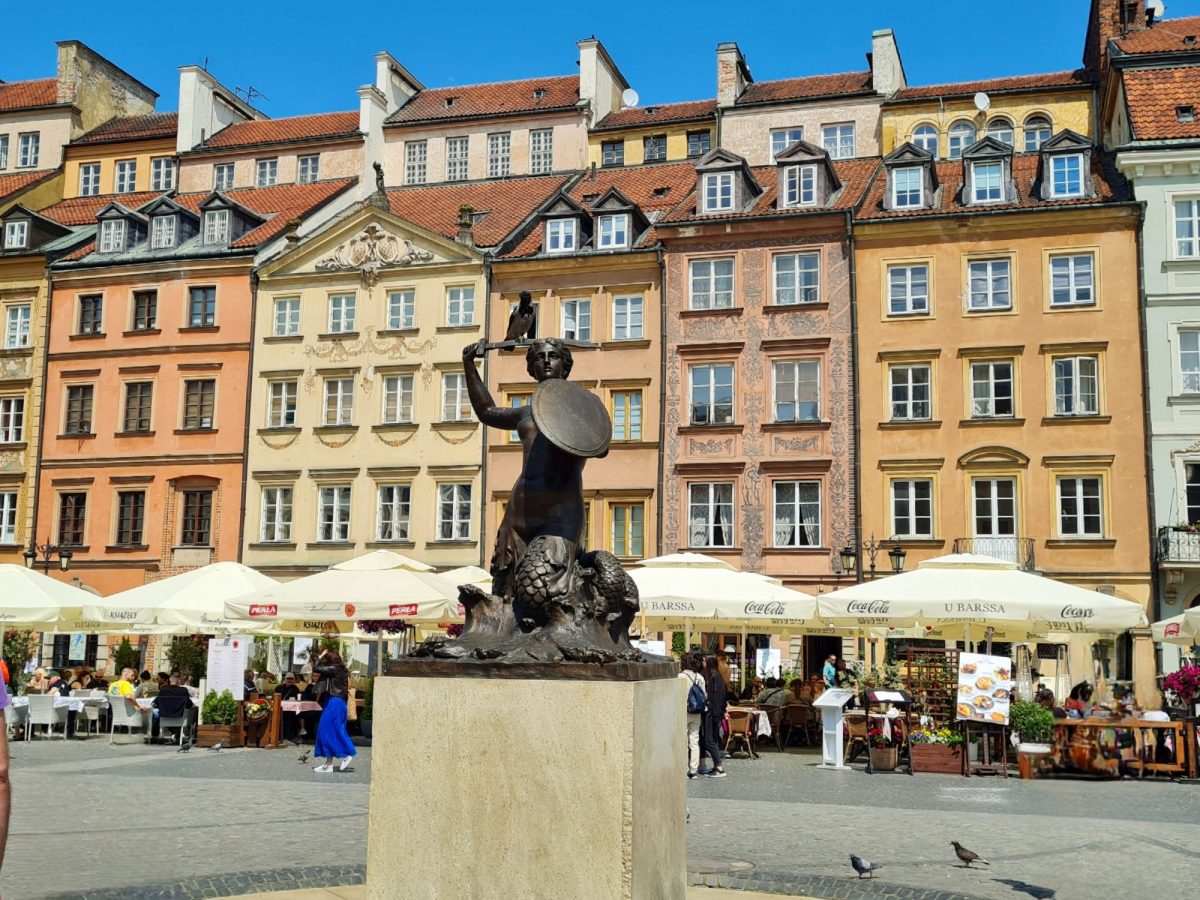
At the main square is a statue of the city’s symbol, a mermaid whose sword is raised overhead. The 14th century myth tells of her promise to protect the people of Warsaw after fishermen rescue her from the clutches of an evil man. That’s her in the feature photo.
Not sure of the significance of the statue below, but the streetscape with its buildings, cobbled roads and outdoors cafes is Warsaw at its sunniest best.

Nearby is the Barbican, an impressive fortification that links up with Warsaw’s historic city walls. We walked along a section of the wall. Obviously a lot of the historic wall is no longer.

Also in the old town is Warsaw Royal Castle which has a strong history of being plundered by both Russians and Germans at different times. Bombed by the Germans in 1944, it took funding by overseas Poles to finance its return to glory. Most was rebuilt by 1984, although the final part of the reconstruction (a garden) was completed in 2019. It’s a treasure trove of beautiful rooms and art work. Hence, it’s very popular and the line up is guaranteed to be long.

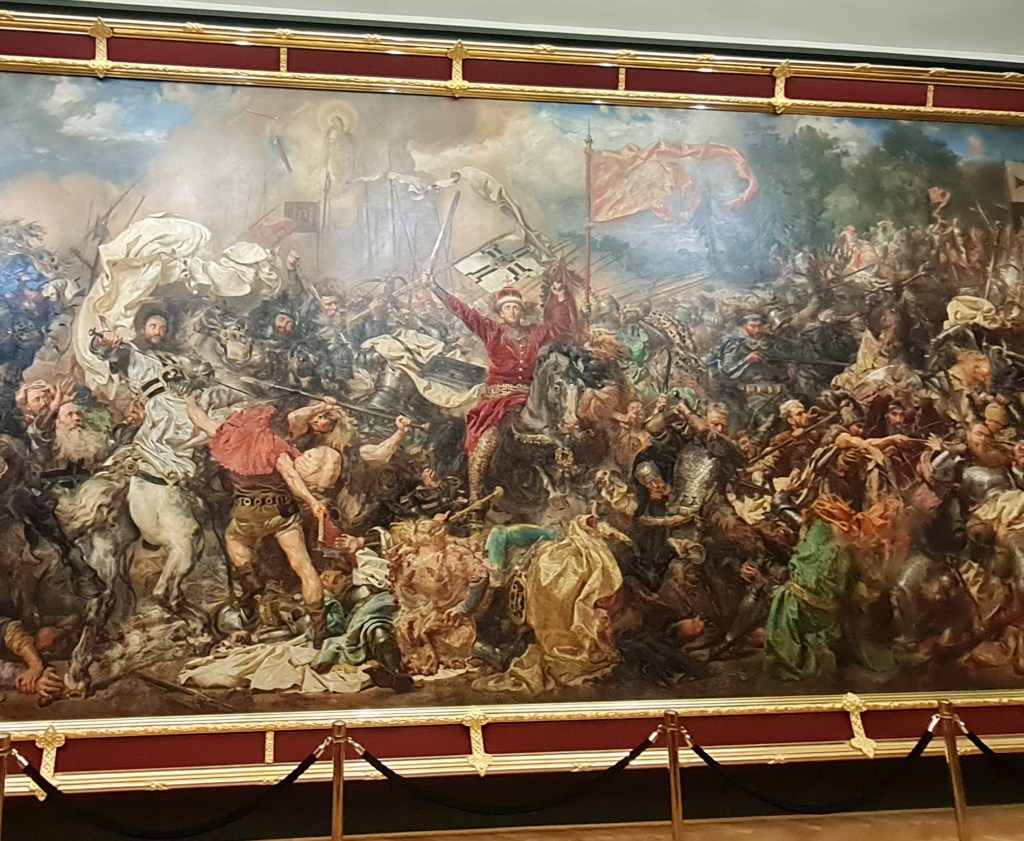
We forewent the castle, opting instead for Warsaw’s National Museum (Muzeum Narodowe). The Medieval gallery was superb as were the many rooms full to the brim with stunning works.


Next door is the Polish Army Museum. The indoor museum was closed, (supposedly heading to a new site) but we were free to roam around the outdoor museum which featured tanks, planes, bombs.

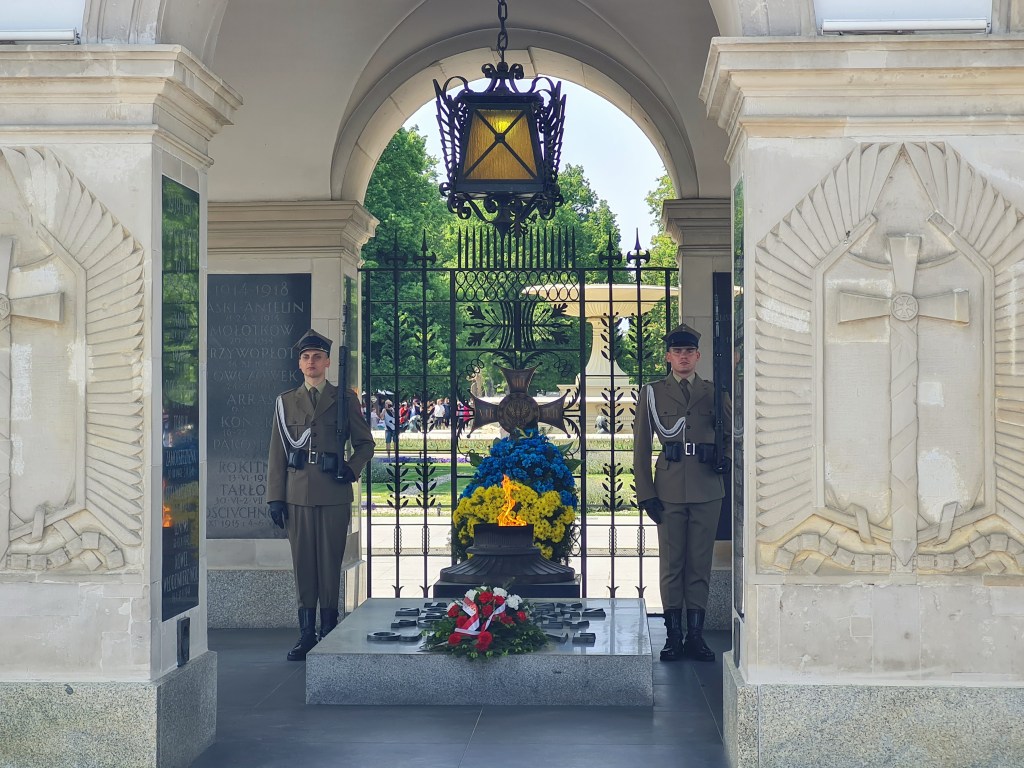
A walk away is Saxon Garden, a picturesque park with formal gardens and home to the memorial of the Unknown Soldier’s Grave.

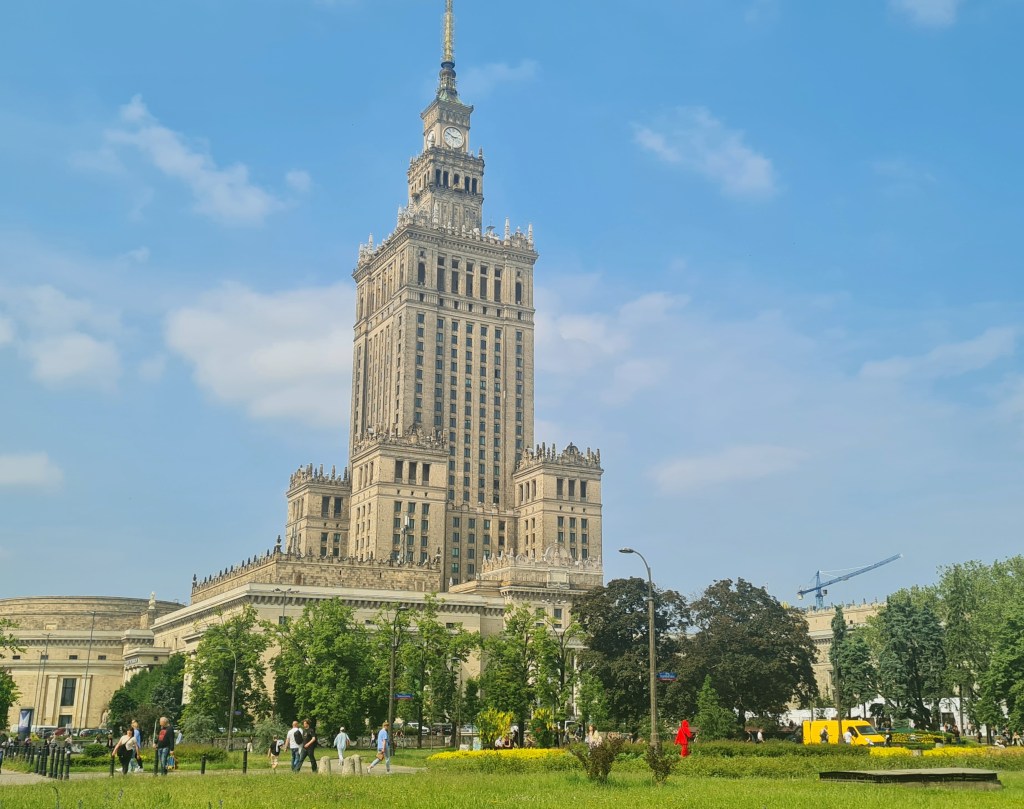
Another site worth seeing is The Palace of Culture and Science, Stalin’s gift to the Poles in 1955 during Poland’s communist years. It’s huge, almost 1 km around the base. Theatres, library, auditorium and museums are housed here. Given that Poland has shaken off its communist past, I’m guessing some Poles would see it as a stark reminder of those years.
Poland’s 1000 years of painful Jewish history is documented at the Polin Museum; the Holocaust as well as centuries of persecution that came before that.
Built on the site of the Warsaw Ghetto, this museum is a must see. Be prepared to spend a few hours.

In a nutshell, Jews’ rejection of Jesus as the Messiah paved the way for much persecution resulting in their diaspora from Palestine. Many found their way to Poland which became home to the world’s largest Jewish community until WWII. This part of Jewish history is well presented.

Then comes the part about Hitler’s hatred of Jews and his iron fisted determination to rid Europe of 11 million Jews as the Final Solution (6 million was the actual number killed). Three million Jewish Poles died, some in the Warsaw ghetto where hunger, poverty and diseases like typhoid increased the mortality rate.
In 1942, the book below written by Jan Karski advised world governments and Red Cross of the Holocaust, but to no avail. No one listened.
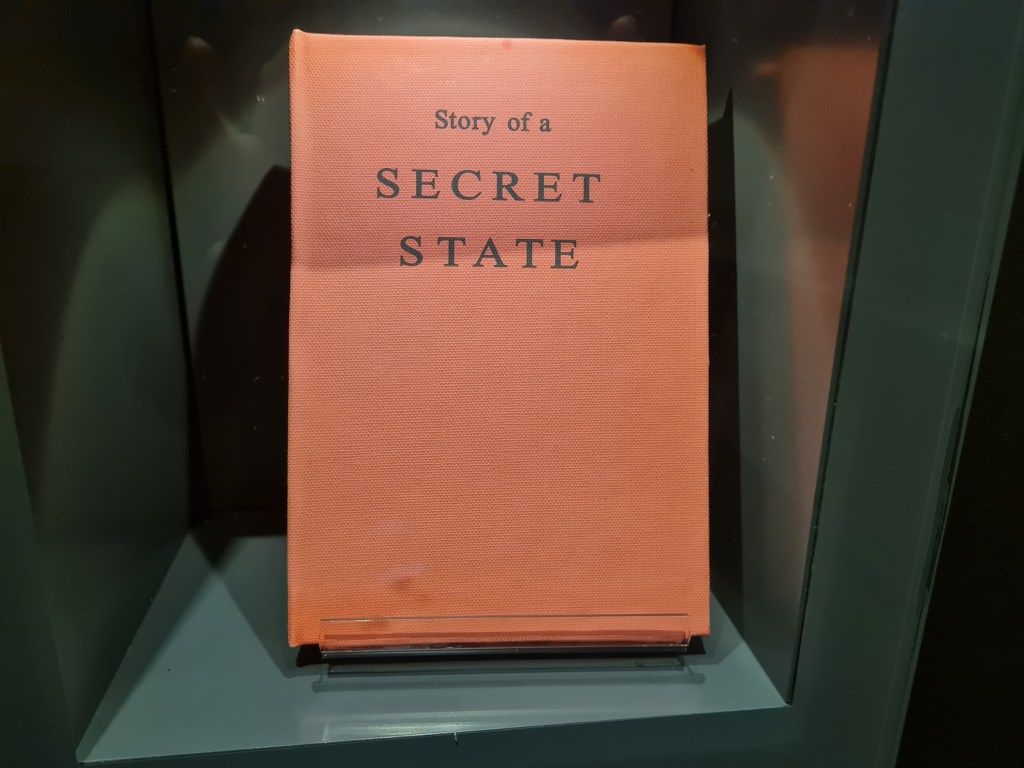
Many things resonated during this visit including these quotes: The responsibility for the crime rests first of all on those who are carrying it out, but indirectly it falls upon the whole of humanity – Zygielbojm
and … One can share the responsibility for the crime without taking part in it.
As we’re well aware, the powers that be created the State of Israel in 1948 and many Jews returned ‘home’. Some stayed in Poland, some emigrated to USA and Canada to an elusive freedom, condemned as they were to a lifetime of intolerable memories.
On a different note, we were pleasantly surprised with Warsaw’s flat terrain that made walking an easy option. We walked everywhere, exploring different neighbourhoods, the river, parks. We didn’t use public transport, but the frequent trams, buses and trains seem like they would make a good option if walking or weather was an issue.
Nowy Świat Street is where we stayed. It’s an attractive street, decked out with spring flowers, outdoor cafes and bars that serve addictive tangy lemon vodka. Its energetic vibe extends into the Old Town.


Anyway, this happy traveller’s still got a few more places to see in Poland. Primed I am for the 4.5 km walk to Warsaw West bus station with my backpack that has slowly but surely put on weight. Can see some serious shedding happening at our next stop, Torun.
 Fuelled by travel
We were in Warsaw a couple of weeks ago. They did a great job of rebuilding it Old Town. Maggie
LikeLiked by 1 person
A city with breadth and depth of history. Really enjoyed it.
LikeLiked by 1 person
My public school education fed me absolutely zilch about Poland so walking through alongside you has been delightful. Interestingly, I’ve just read the biography of Joice NanKivel Loch, Australia’s most decorated woman ( beating even Nancy Wake), who assisted the Poles in refugee camps after WW1 and who assisted 1000 Polish women and children to escape the Nazis during WW2 ( Operation Pied Piper).
LikeLiked by 1 person
A most interesting country with a rich history. Will make sure I read that biography. No doubt her name will be in one of the many museums in Warsaw. Poland is incredibly easy to travel … maybe a future trip for you?
LikeLike
I’ve just been told about a road trip around Inverell and Warialda in NSW which covers the history of painters, Tom Roberts and Arthur Streeton. And there is a Bacon Festival in August in Kingaroy.🐷🐷🐷🐷🐷🐷🐷
LikeLiked by 1 person
There’s no end of interesting things to do in Oz. Think the camper will be coming out when we return
LikeLiked by 1 person
Such an easy country to travel around. Can’t speak Polish, but google Translate is worth its weight in gold.
LikeLike