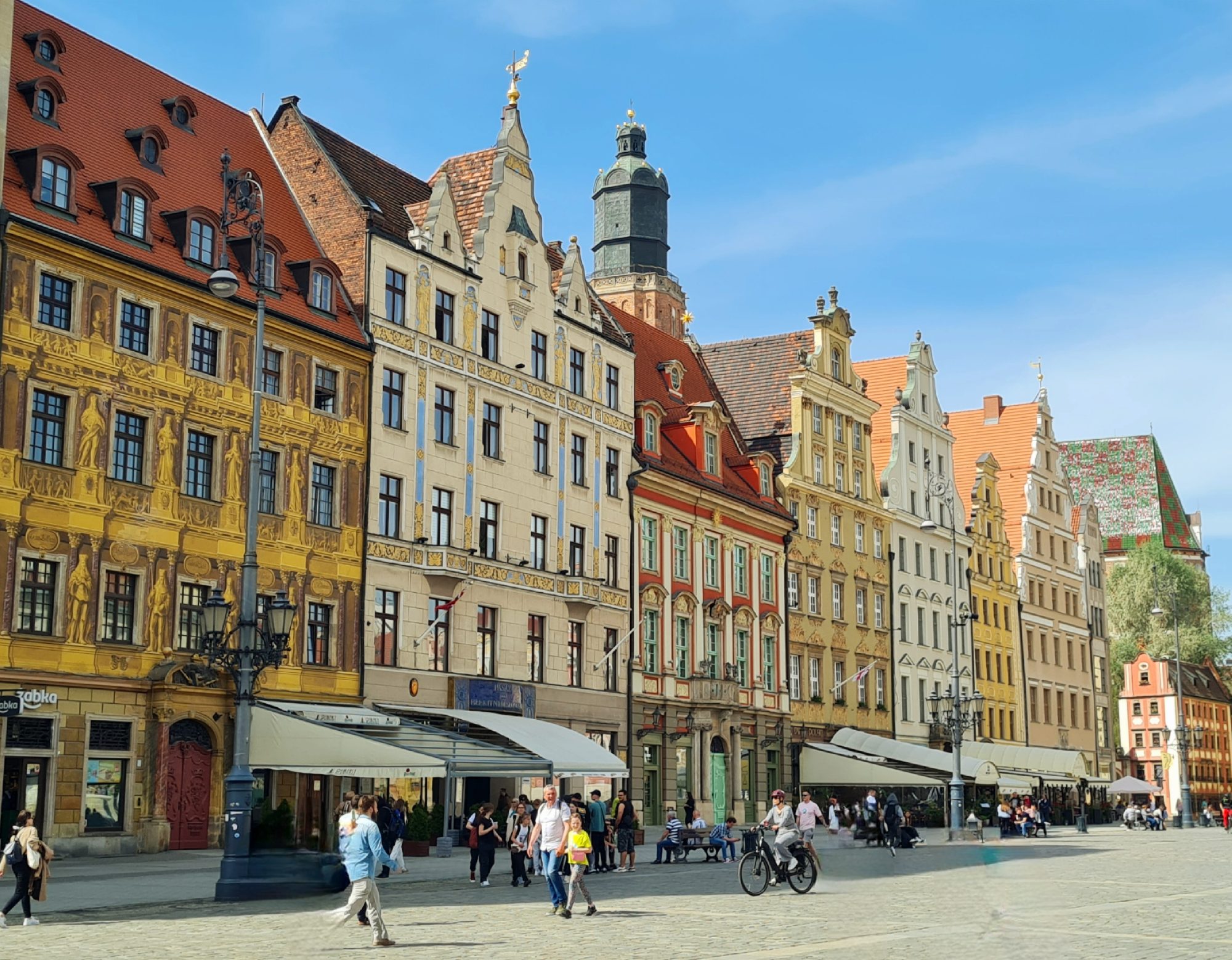
So glad we included Vrohtz-wahv in our Poland itinerary. It’s the architecture – the colours, the designs, that make this city a stand out. Add Wroclaw’s choppy history into the mix and it gets even more engaging.
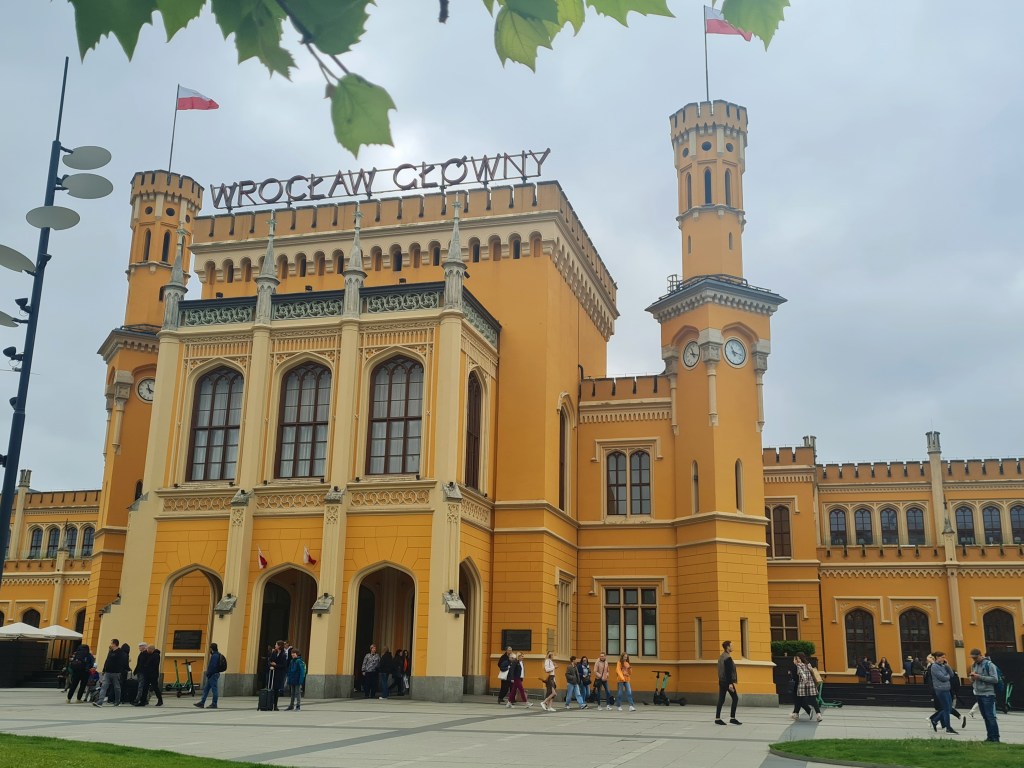
Our first appreciation of Wroclaw’s architecture was Wroclaw Glowny (train and bus station) built in 1857 and a recent recipient of renovation funding. Inside and outside, it’s worth a long look. We arrived and exited here on Flix bus.
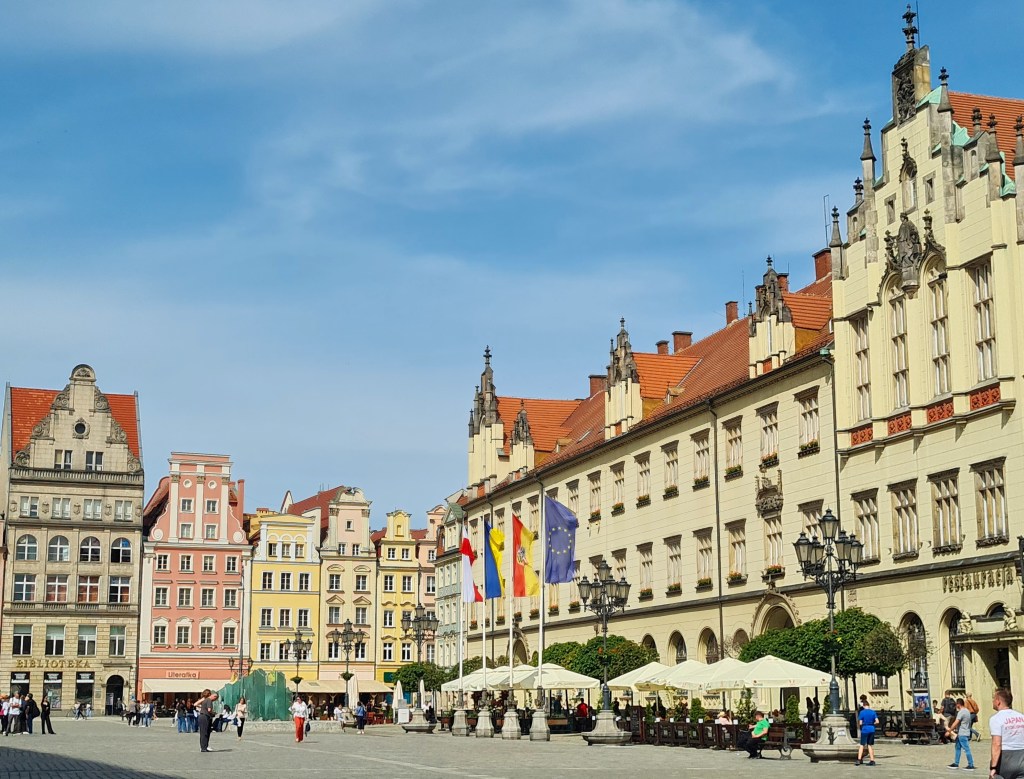
Wroclaw’s main square is akin to a fairytale with Town Hall taking centre stage. Construction began in the 13th century and while it’s a number of buildings cobbled together, the design works.

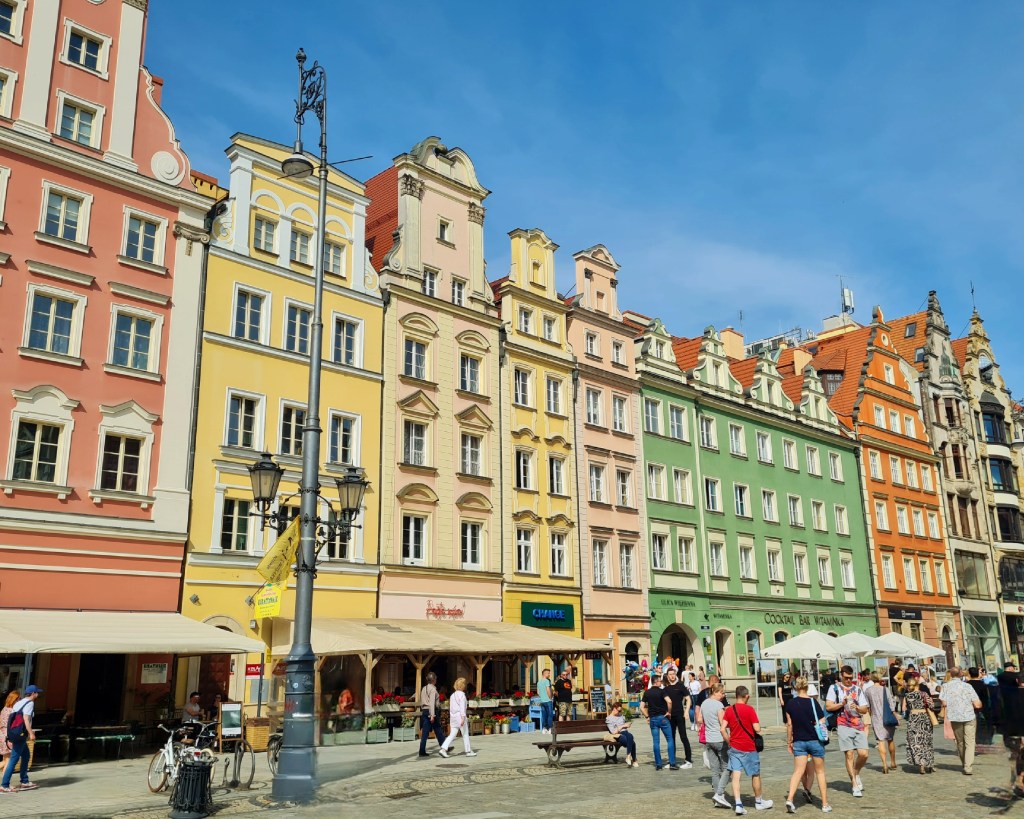
The vibrant colours and energy of main square continue in these photos.



Grand churches are plentiful in Wroclaw. Take your time at Church of the Most Holy Name of Jesus where the art gallery interior is a feast for the eyes.


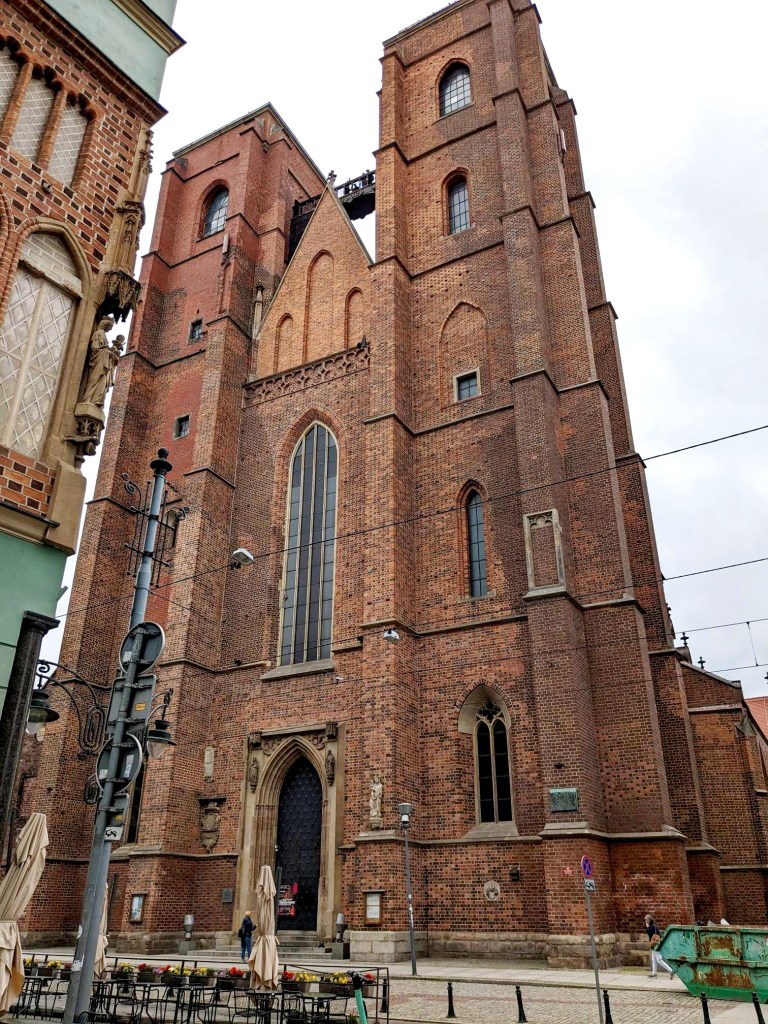
The Penitent Bridge (Mostek Pokutnic) is an open air footbridge between the two towers of Mary Magdalene church at a height of 45 metres. We climbed it, albeit slowly.

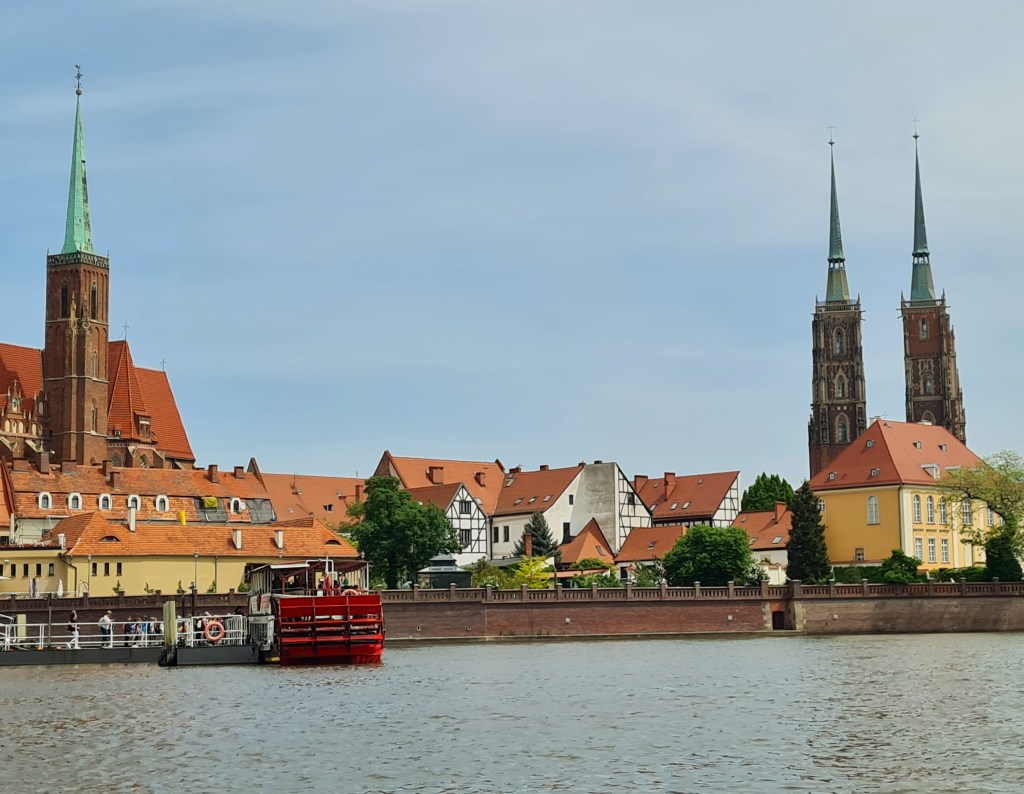
Wroclaw is blessed with waterways ; rivers and canals. A 45 minute Oder River cruise shows visitors an interesting view of the city.
Wroclaw’s history is a twisting tale of rule by Czech Bohemia, Austrian Hapsburgs, Prussia/Germany and the Soviets. This city’s borders and people have constantly shifted.
In 1945, Wroclaw was in Germany and named Breslau. 99% of the population was German and it was the third largest German city behind Berlin and Hamburg.
Yet, post-war treaties saw the Germans expelled and replaced with Poles from Polish territories in the east which were annexed by USSR.
Royal Palace History Museum is a good place to get the heads up on the last 1000 years of Wroclaw history.

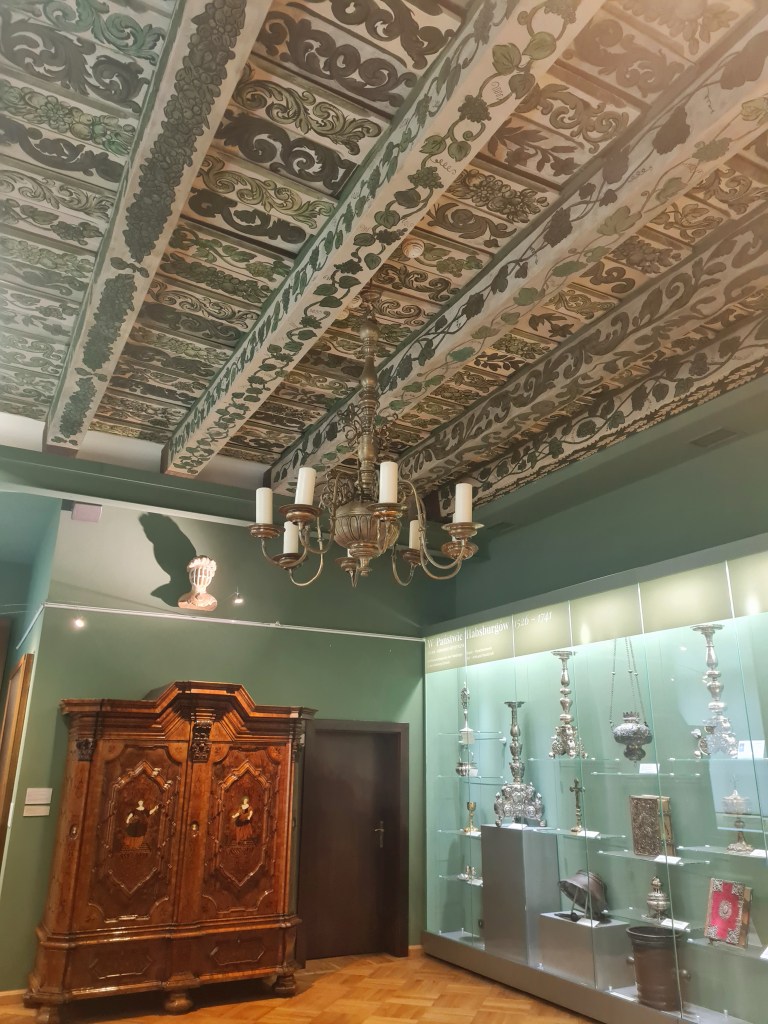
The museum also presents the Sovietisation of Poland; the communist takeover was complete by 1948.

Another museum well worth visiting is the Depot History Centre, which traces Wroclaw after WWII. A mish mash of people were forced to migrate to a city extensively bombed and endure martial law. Difficult times indeed. No wonder some left Poland and settled in other countries.
Tensions spilled over at this train depot in 1980 when workers went on a hunger strike. Enter the Solidarity movement, a Polish wide movement which brought 40 years of Soviet communist rule to an end in 1989.

Monument to Anonymous Passer-by has 14 bronze statues, symbolic of repressive Soviet rule when many Poles disappeared after being arrested. Little by little the once upright statues descend into oblivion.

The ‘Dwarf Uprising of Wroclaw’ became a silent but obvious form of anti communism resistance. During Soviet rule, dwarves were painted over grafitti like the winter is yours, the spring will be ours. In 2001 hundreds of tiny bronze statues performing all kinds of actions appeared. The Dwarf Hunt is especially popular with children.

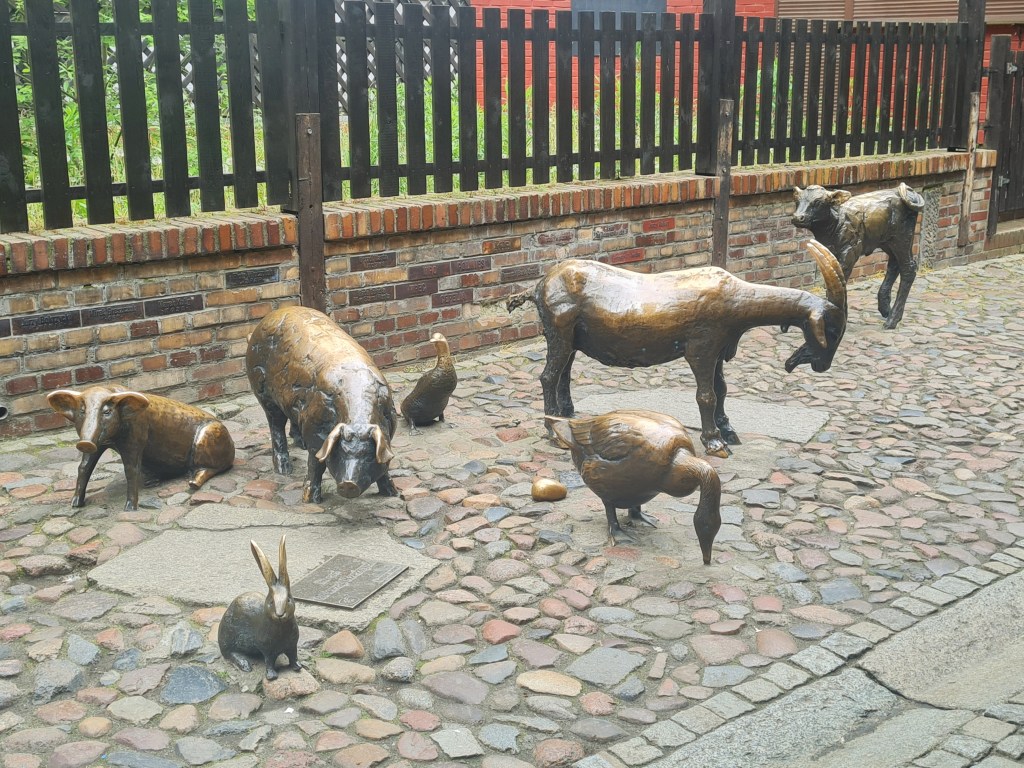
Memorial to Slaughtered Animals is in a small lane that was once the town’s abattoirs. Some say the memorial helps Wroclaw atone for its carnivore habits. Certainly, there are many vegan eating options in this city.
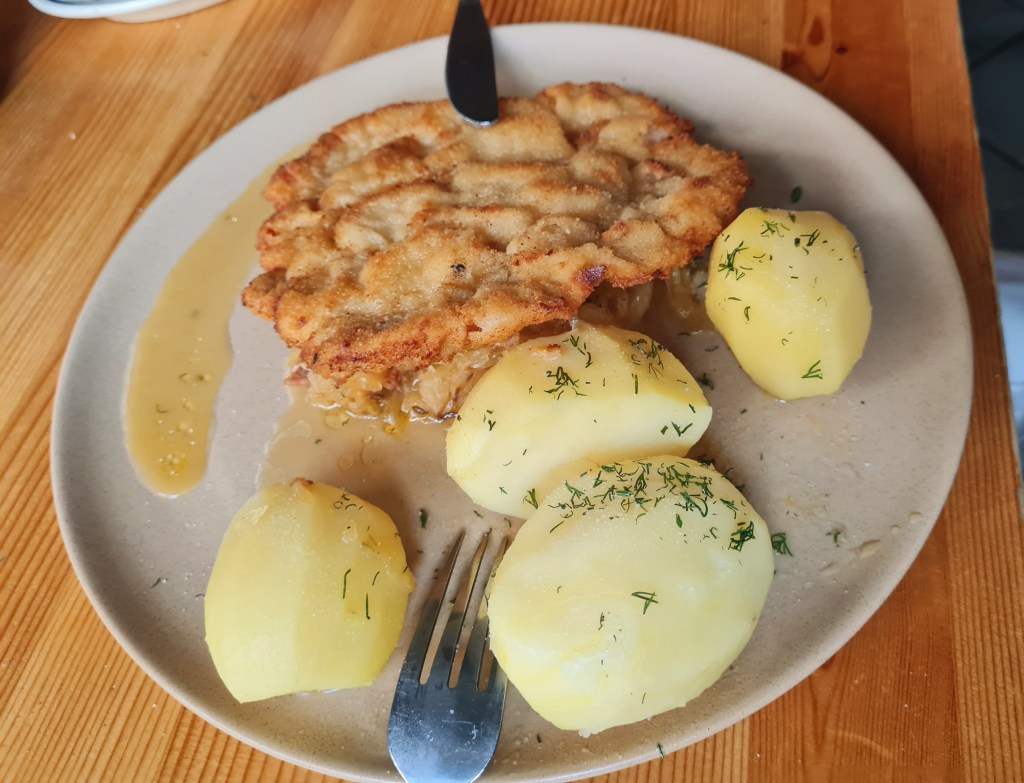
And on a lighter note, we certainly enjoyed Polish fare.

Had a good time! Now flix bussing to Warsawza.
 Fuelled by travel
The monument to the Anonymous Passer-By is incredibly powerful. Also like the Dwarves and the potato dumplings make me peckish. Thanks for sharing:)
LikeLiked by 1 person
A bit of a politically charged city. Eating my fair share of dumplings over here.
LikeLike