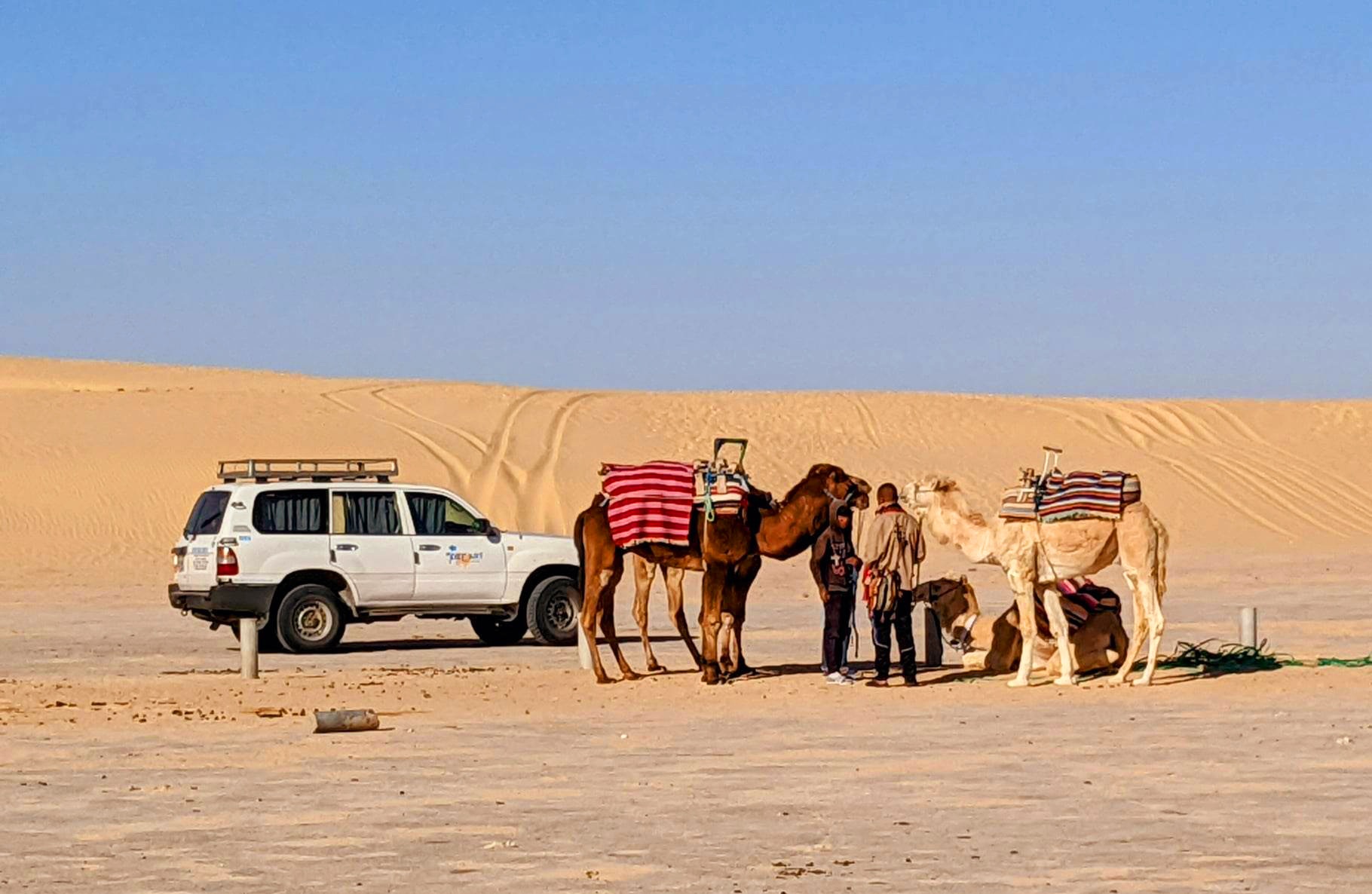
Hands down, one of my best travel moments was a two day desert tour with a competent driver and an extremely knowledgeable guide from Djerba based Depart Travel.
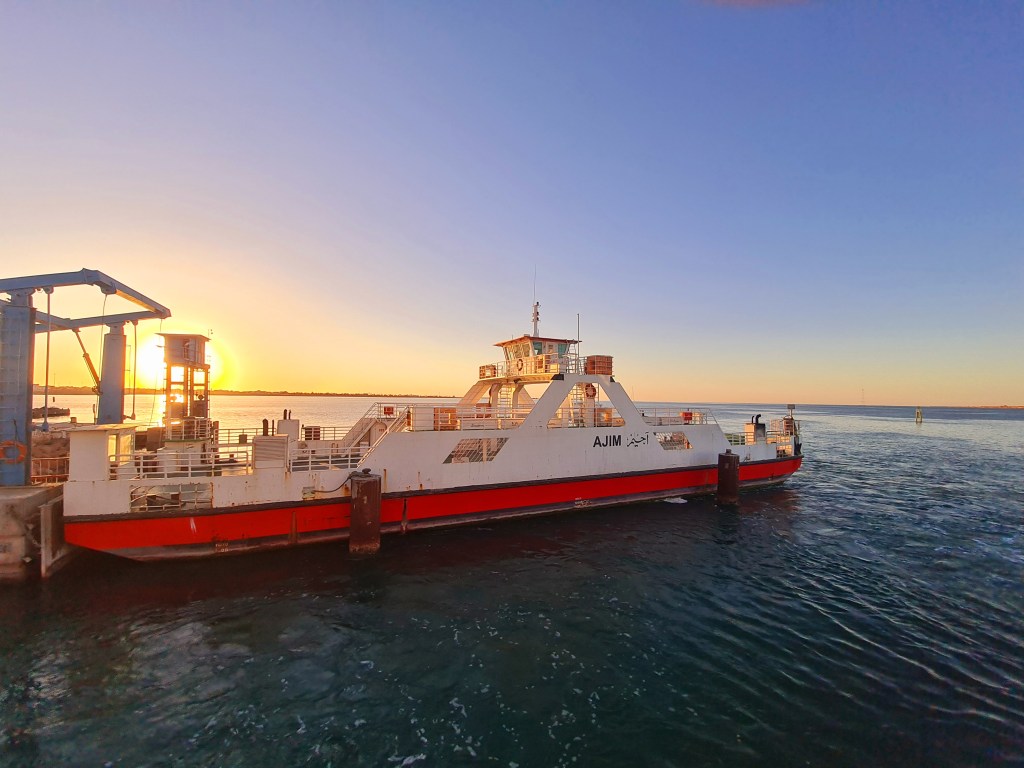
Not even a 6am hotel pick up to board the vehicular ferry for the 20 mins ride from Djerba Island to the mainland was a deterrent. And the rising sun – just glorious.
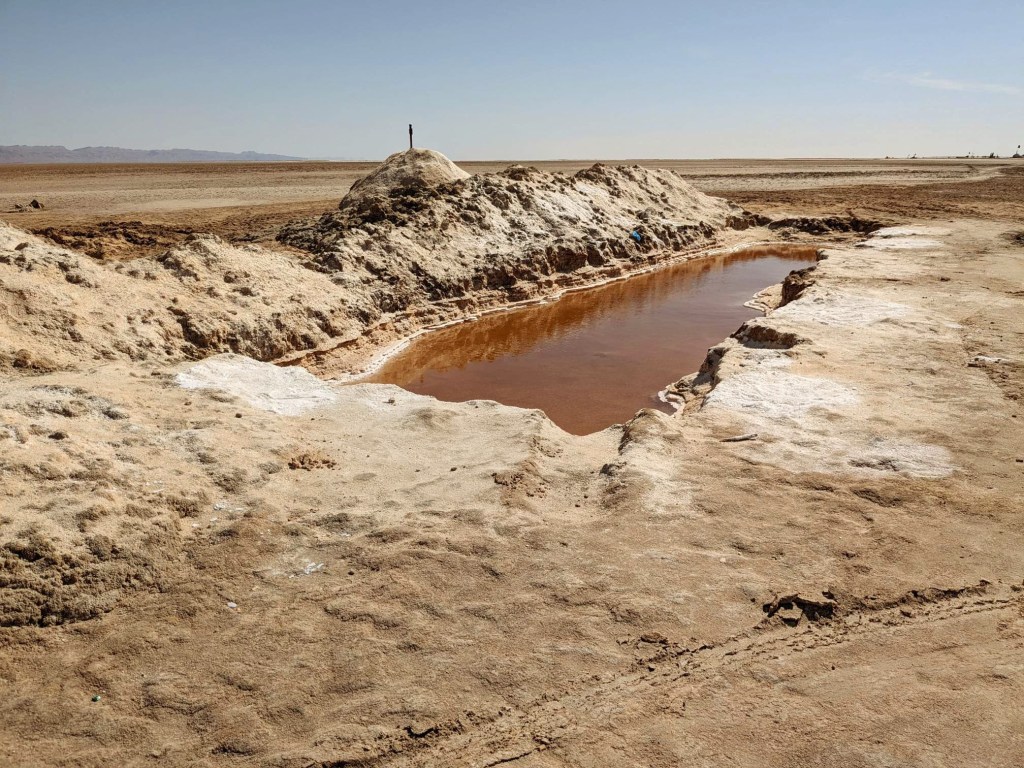
First up was the crossing of Tunisia’s largest salt lake Chott el Jerid which covers an area of 7000 square kms. An elevated causeway passes through the middle. It takes time to cross the lake and time to check out the salt encrusted flatness (so much salt) and mirages (they look so real).
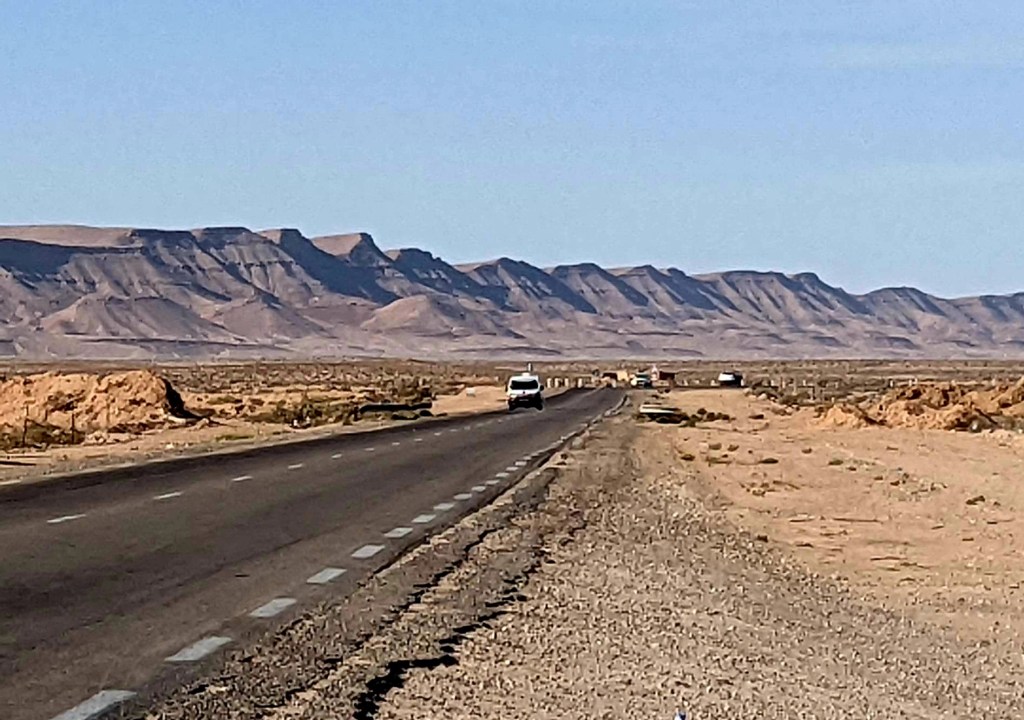
Further on, the landscape changes from a salt desert to a rocky one. The Atlas Mountains which traverse Morocco, Algeria, Tunisia and Libya form a rather imposing background in this next photo.
This sign pointed us to the Algerian border.
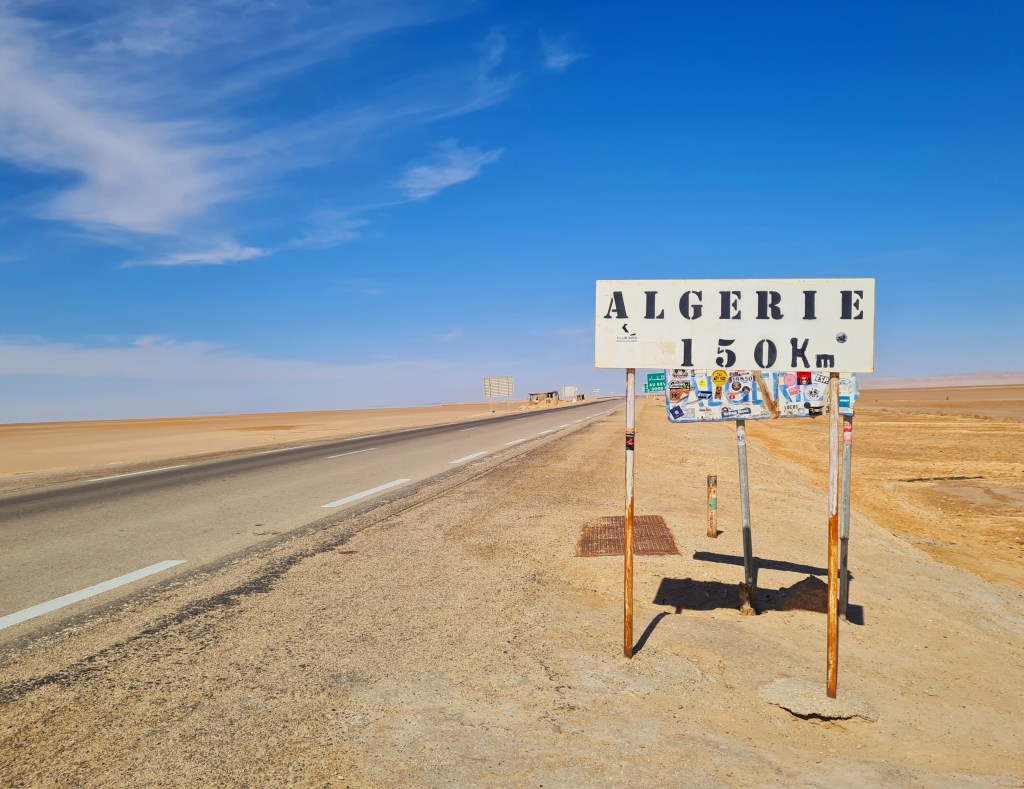
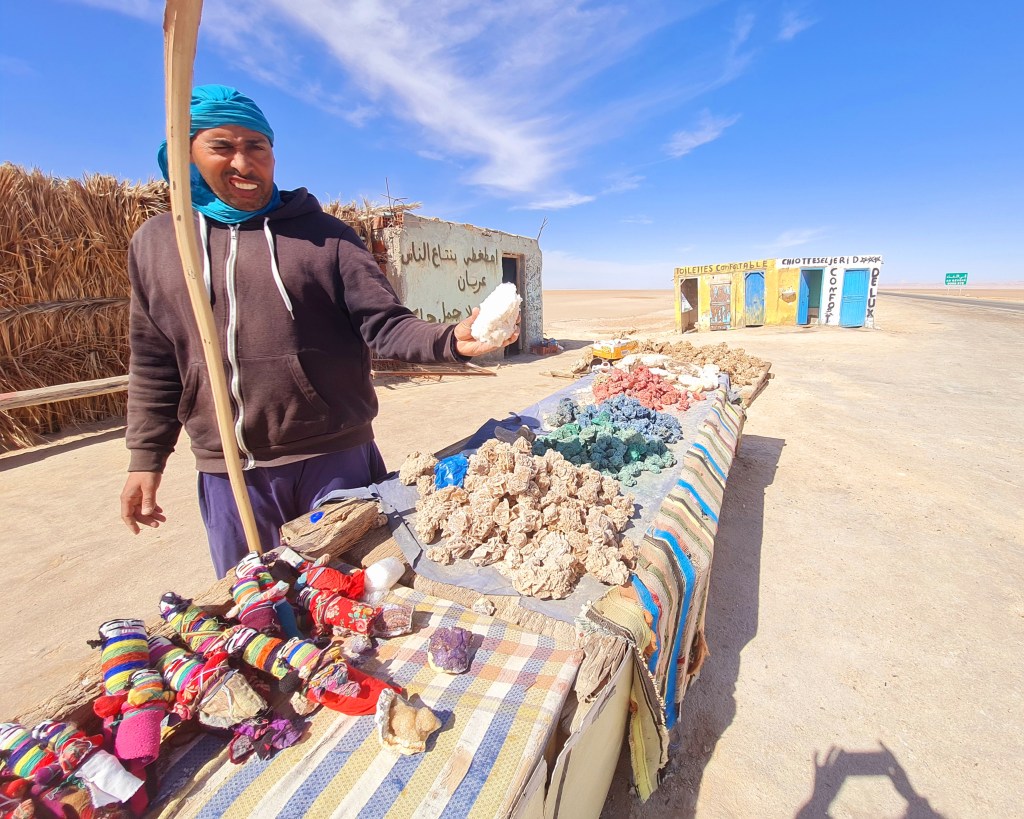
High on the hill (on the right) are the white pegs marking the border between Algeria and Tunisia. A traditional country with significant reserves of oil, Algeria dances to the beat of its own drum. For the time being, the road into Algeria is the road less travelled since entry is barred.
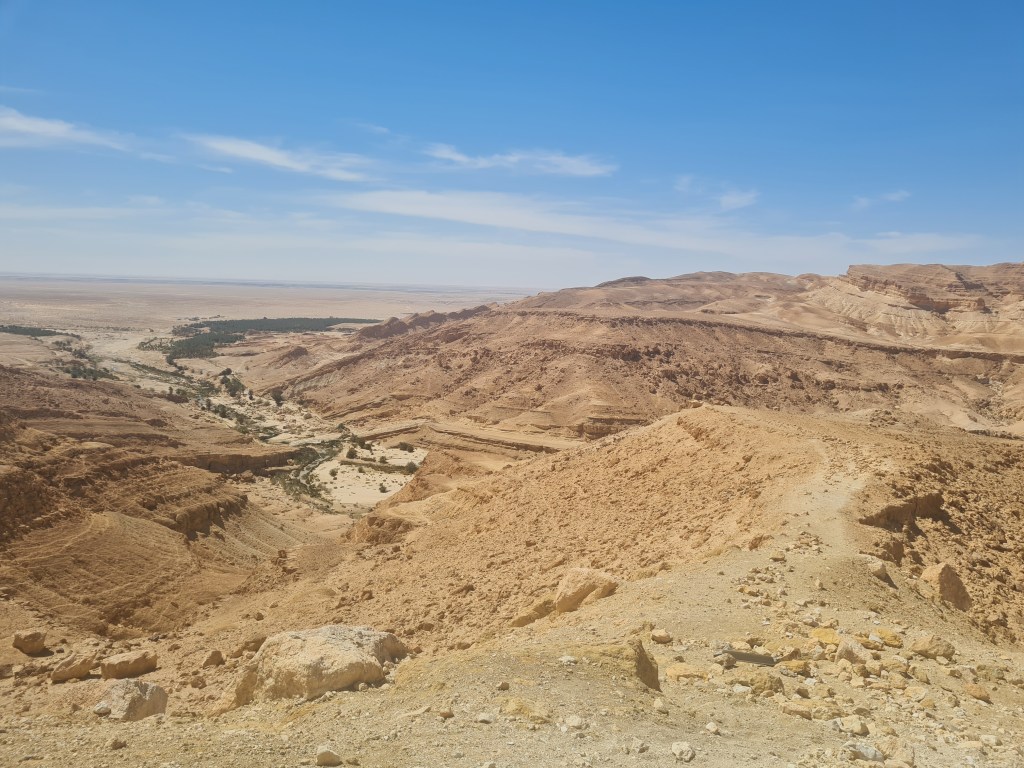
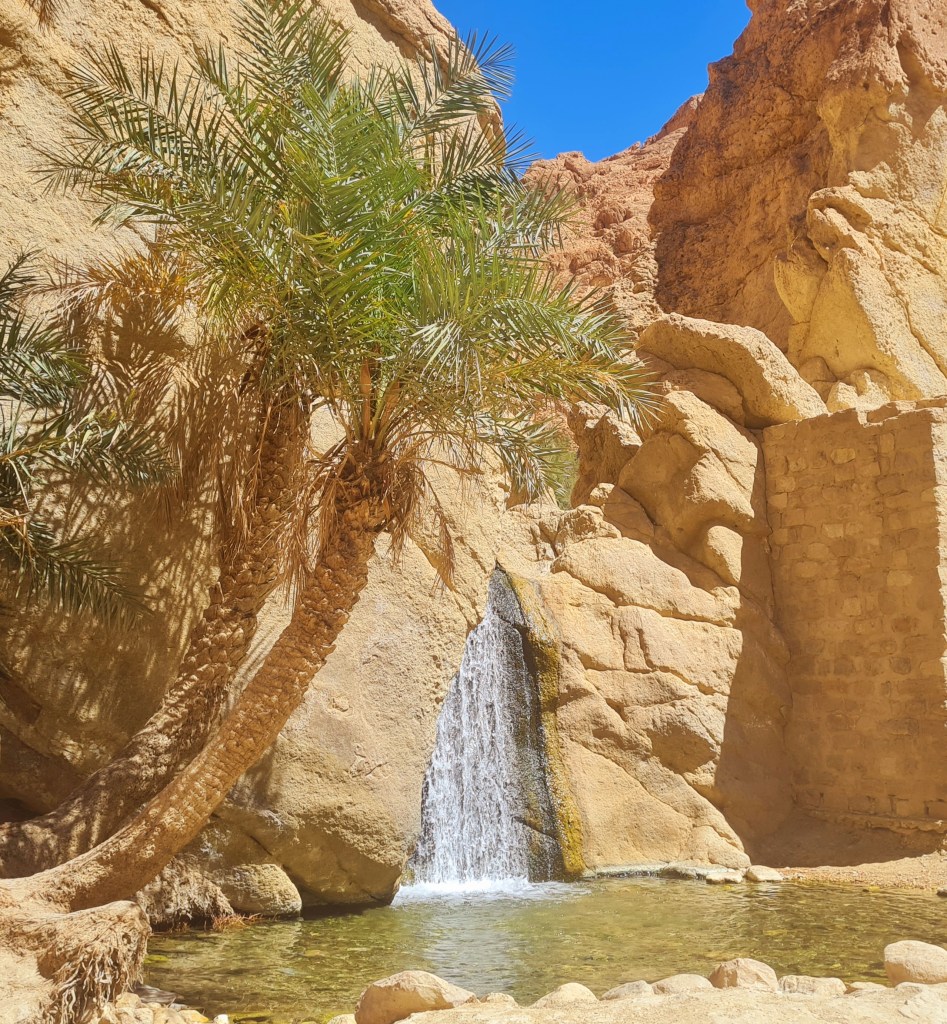
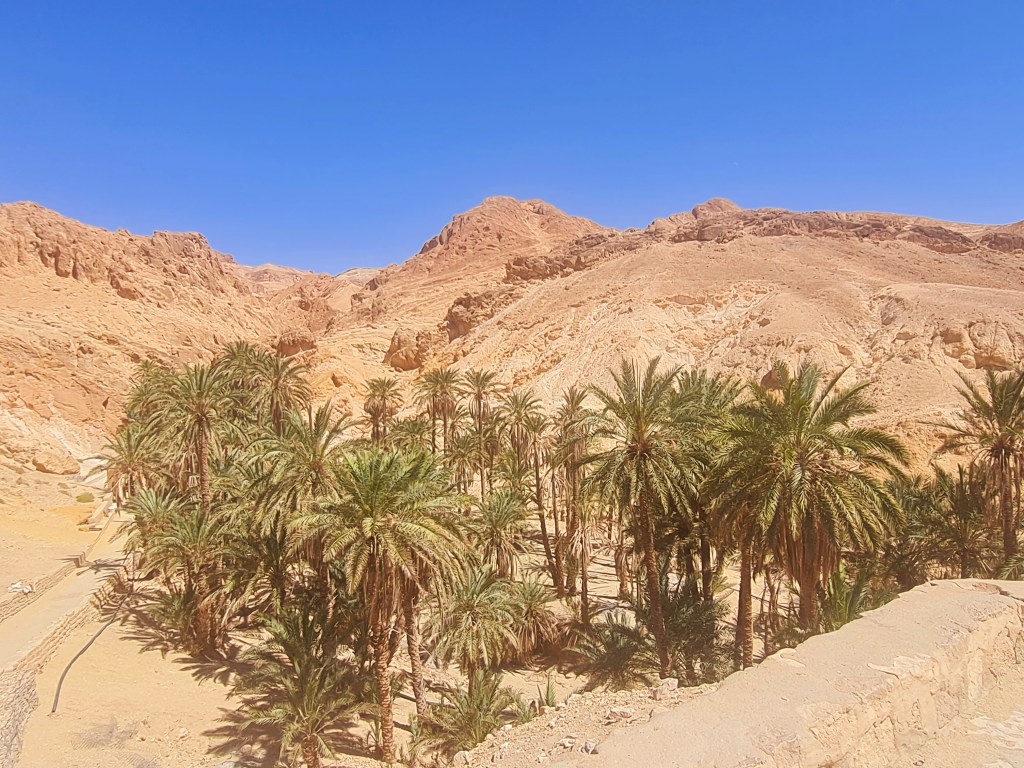
In this rocky desert, it is the oases that break up the inhospitable landscape. Green with purpose planted date palm trees amid life giving water, they make a welcome sight. 150 different types of date palms are grown in Tunisia.
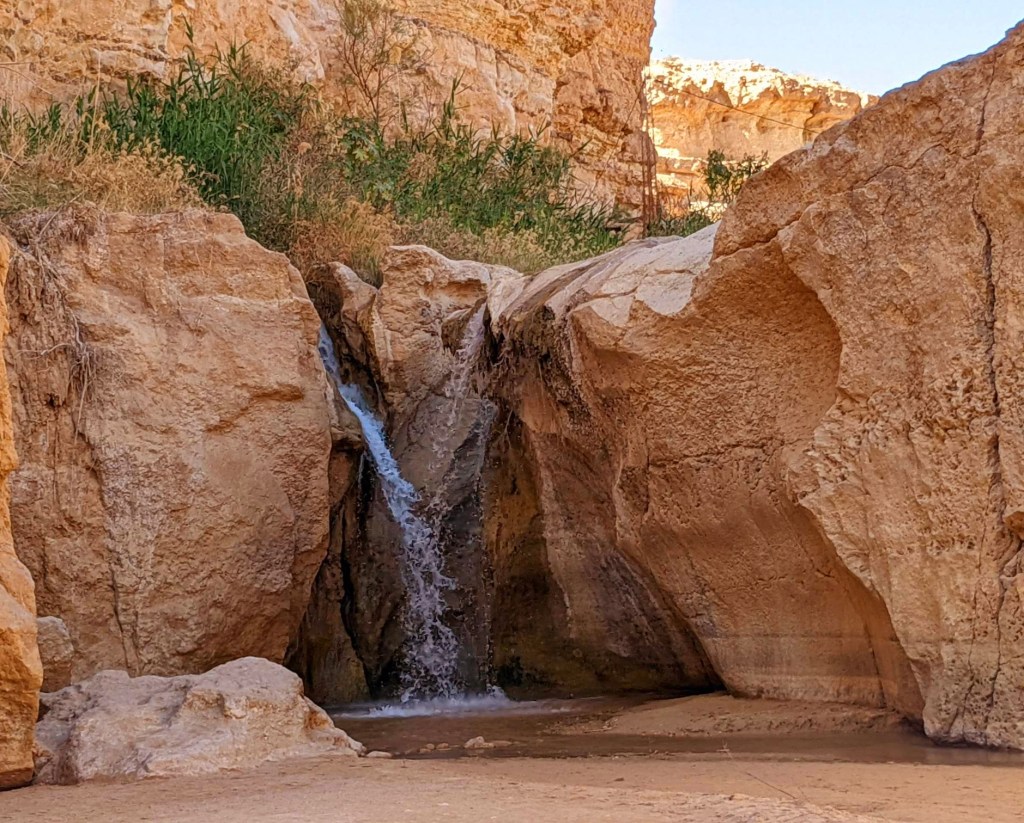
Next up was the adrenalin racing ride along parts of the Old Dhaka rally track.
Driven at high speed sideways across a sheer vertical wall held in with a tight seatbelt and later, perched stationary at the crest of a sand dune knowing that a steep plunge was next on the Dhaka track agenda, the heart rate sure did shoot up.
But … I didn’t scream – our guide was impressed! All thanks to the expert driver.
There were a couple of moments as we were driving through the desert that I completely lost my bearings. I had no idea where we’d come from nor the direction in which we were headed. Such is vastness.
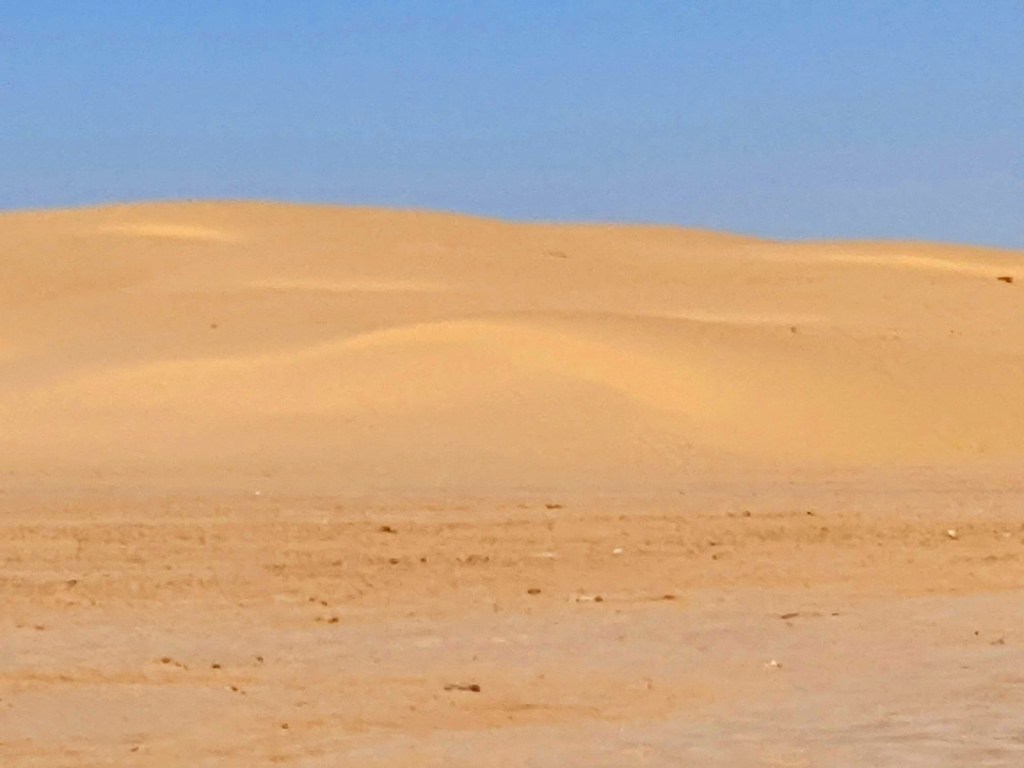
Nomadic desert people (Berbers) live here though. Small groups, they hunker down against the elements tending their camels.
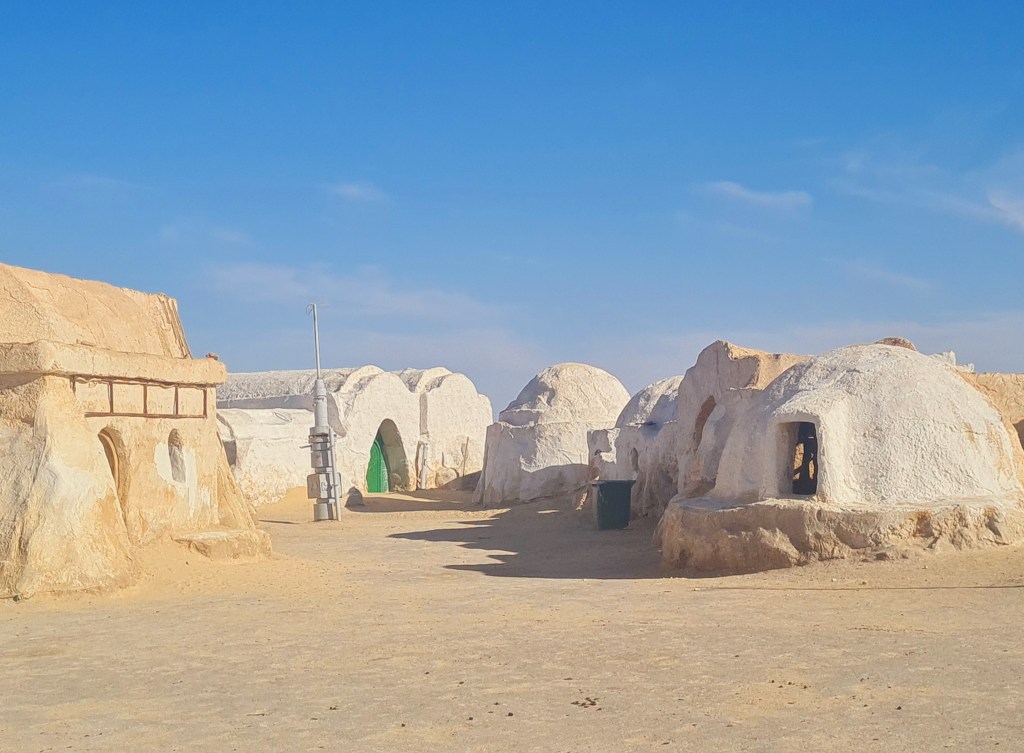
After the sand dune crossing, we arrived at the Star Wars set. It was surprisingly intact. It’s here you can ride a ‘Ship of Sahara’. I passed. Terra Firma felt pretty good to me at this point. Anyway, camels in this part of the world are useful for their milk, meat, hair, leather and transport.
The Sahara is a military zone; a permit is required. It’s impossible for individuals to drive their own vehicle. Tour companies are issued with permits and know their way around the desert.
The Berbers, the original inhabitants who arrived here from Egypt have a strong desert presence as we saw on the next part of our tour.
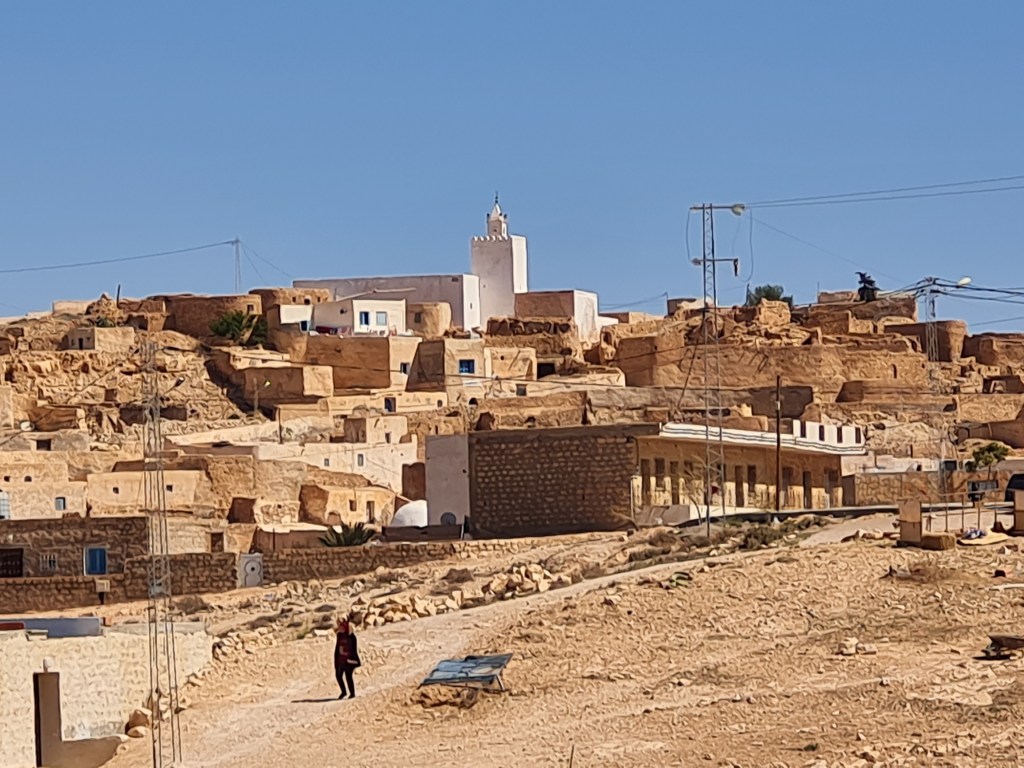
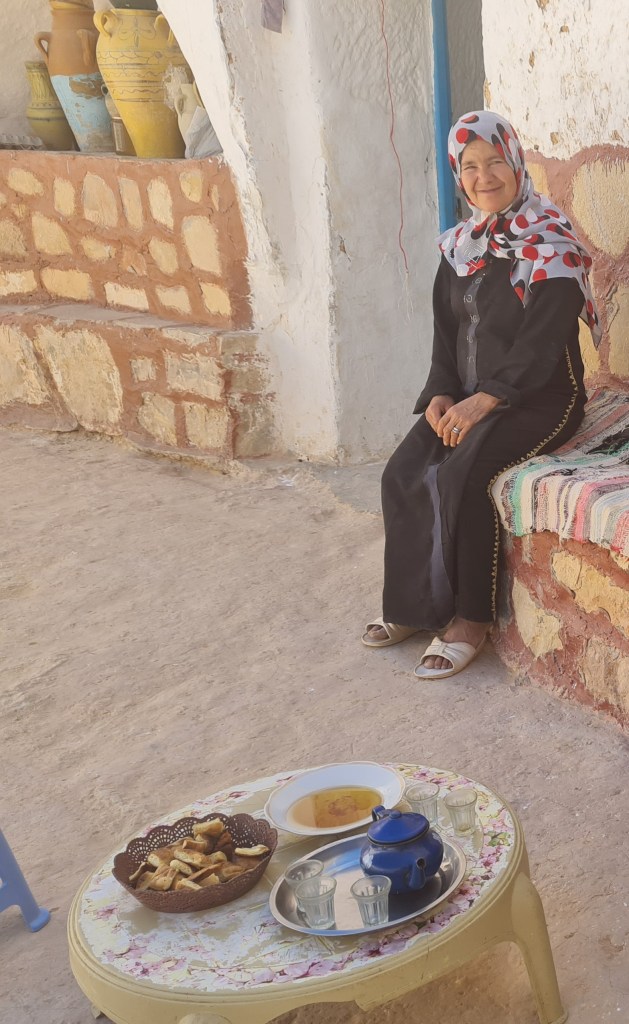
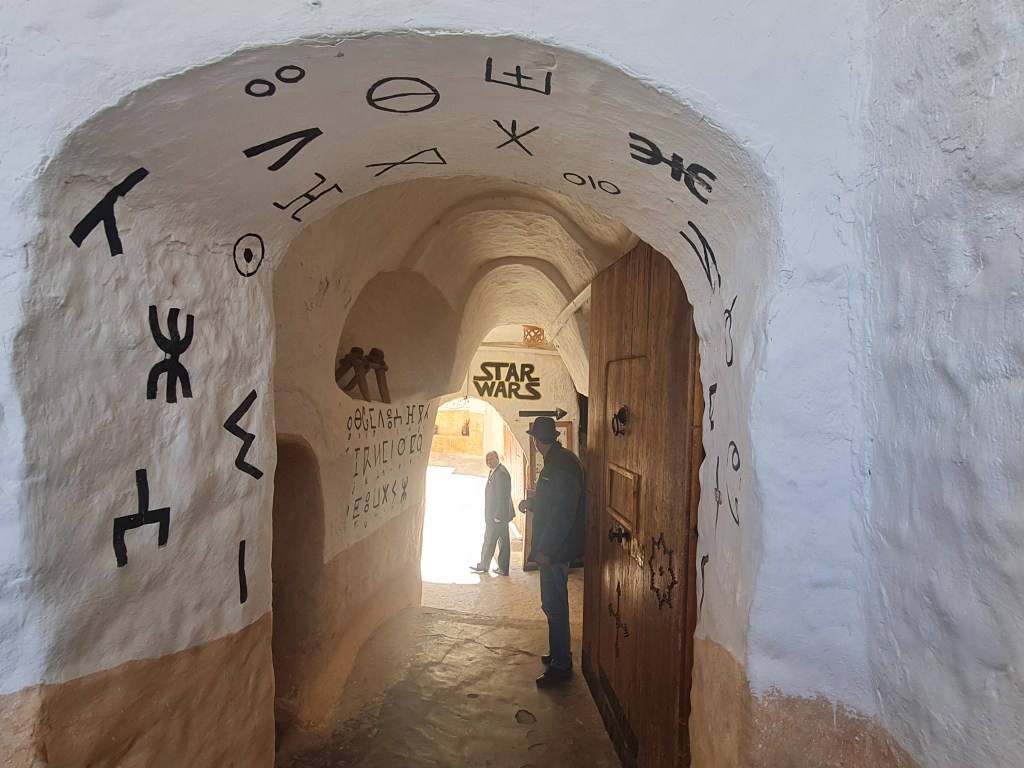
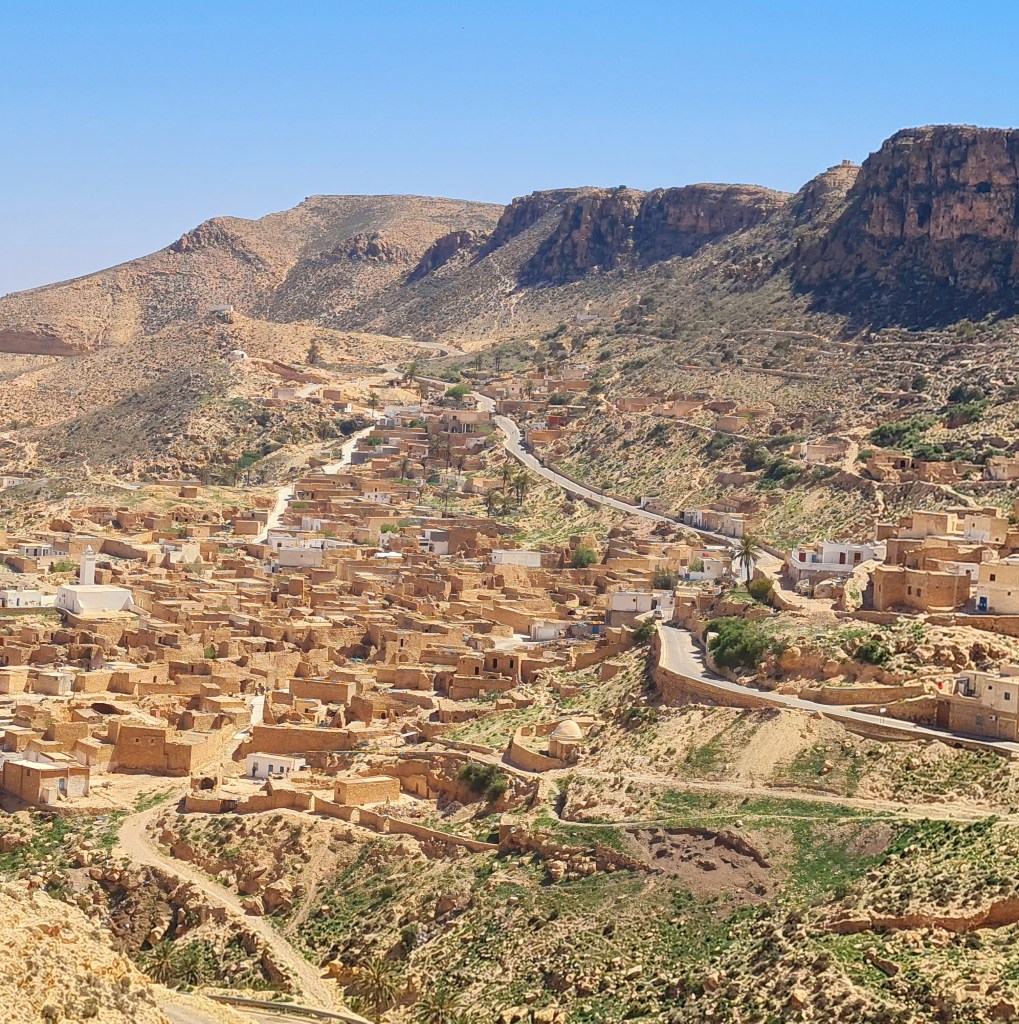
Our guide recommended a visit to a Berber house. Four families live here. Entry is via an underground tunnel which exits at a very large, round, open to the sky area with a number of rooms branching off. Each room is deeply carpeted and extremely comfortable with plenty of space for everyone.
Further along, we checked out the most interesting Fatnassa Thermal. Water from 3000 metres below ground is pumped above to be cooled. And it must be cooled as the temps sit between 60 -80 degrees.
The cooling place? This abandoned hotel. The water is pumped to the roof and then flows down through the building, down the outside stairs (steam is visible) and into cooling ponds.
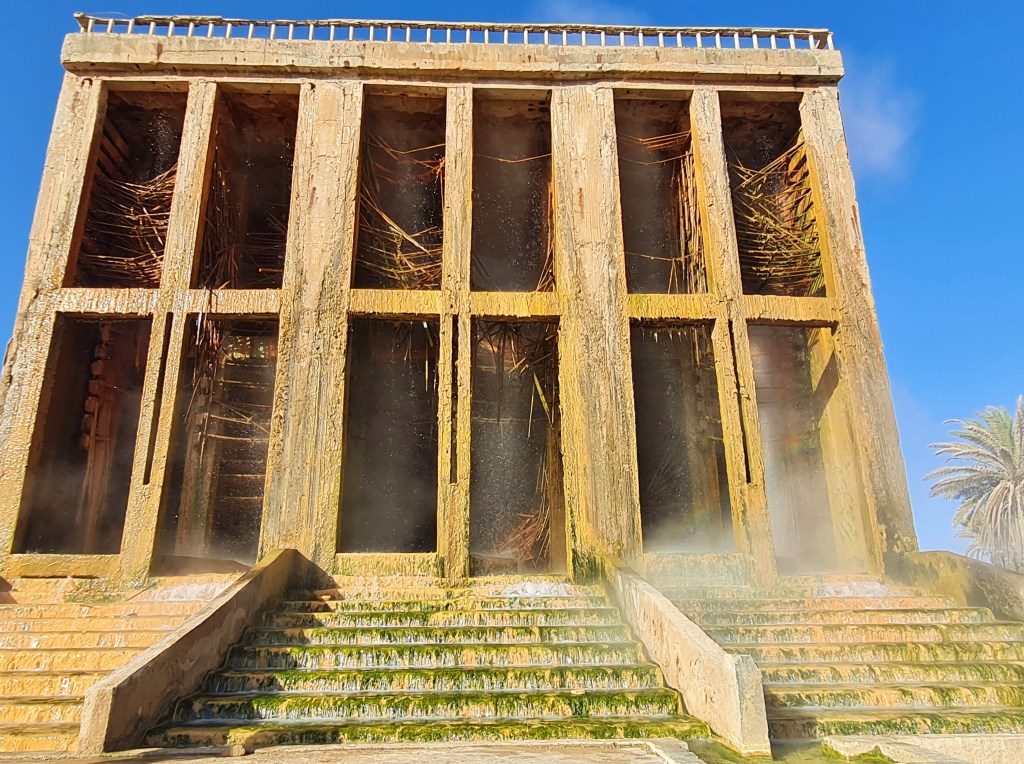
Once cool, it is used to irrigate date palms morning and night.
Evaporation rates are great and many aquifers in Tunisia are drying out. The drought is real. Water is scarce, so scarce that some provinces turn off water from 9pm to 6am each day.
Talk is that Tunisia may have to follow Saudi Arabia’s lead and install expensive desalination plants. A difficult decision since Tunisia’s economy is already at a dangerous level with IMF support being sought.
We really enjoyed the night’s stop over in the desert town of Tozeur and then travelling into Douz the next day. Both towns will soon be alive with tourists, seeking out desert tours.
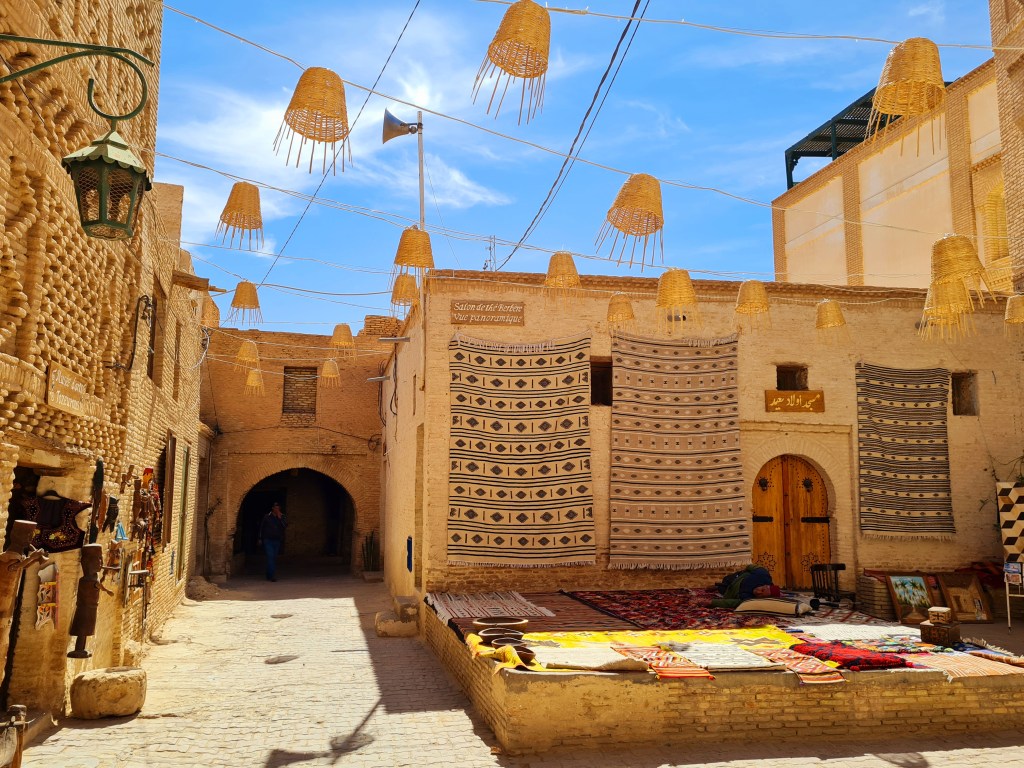
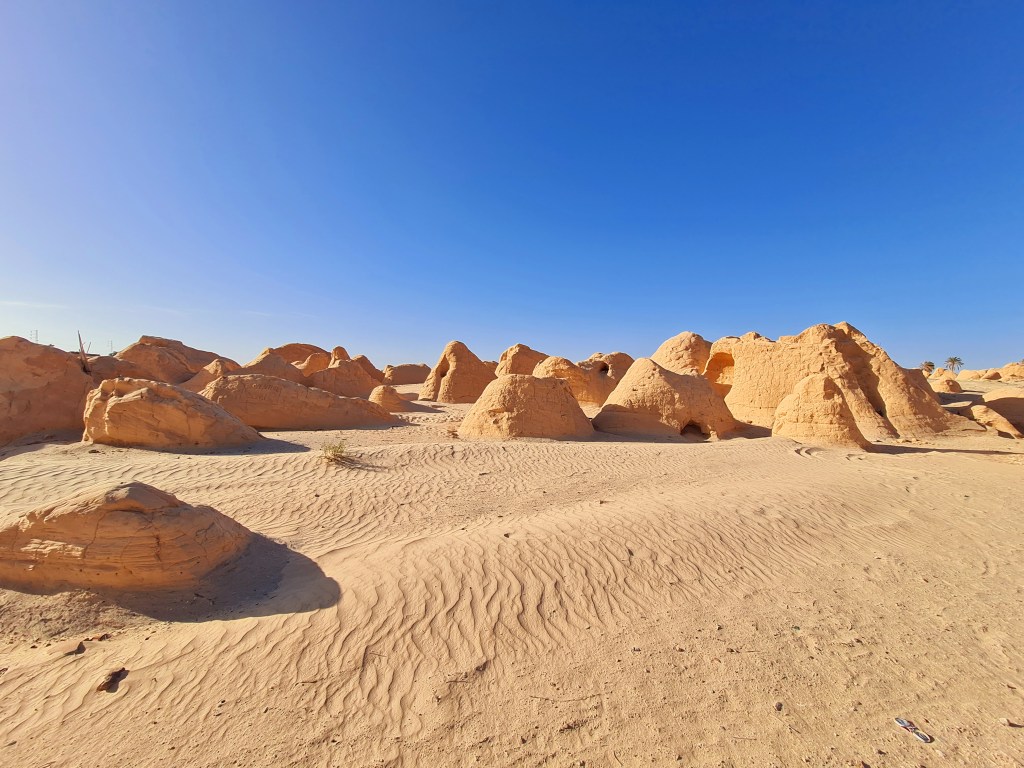
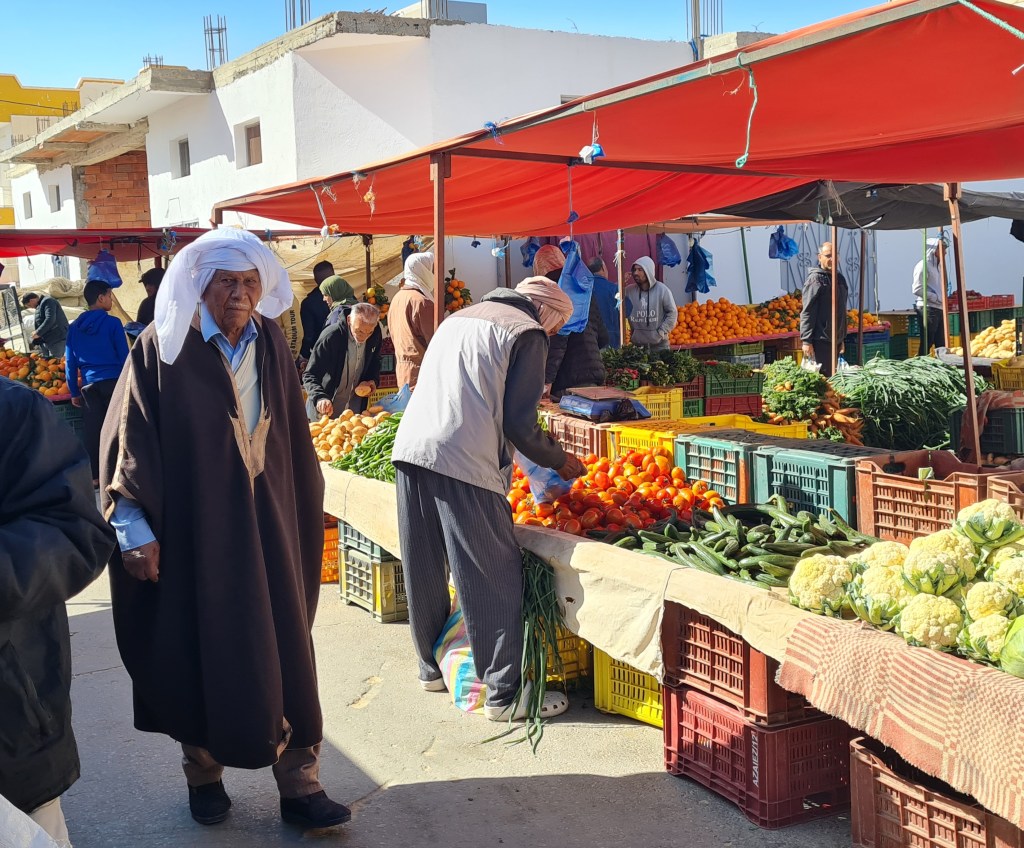
Thanks Depart Travel – had a wonderful time with Zu and Mohammed.
Tomorrow we’re off to El Jem to see its fabulous Roman amphitheatre.


It’s a great story, thanks for all your info’s
LikeLiked by 1 person
Glad you like it. Have met a few German travellers here.
LikeLike
The desert landscapes are beautiful. Sounds like quite the adventurous drive! Maggie
LikeLiked by 1 person
Was really enjoyable. Must catch up on your travels!
LikeLiked by 1 person
It is so sandy and dry yet they manage to grow what look
Iike really lovely vegetables. Those cauliflowers look magnificent! Amazing…..
LikeLiked by 1 person
Plenty of vegetables, oranges, strawberries and dates. We hit the markets each day and stock up!
LikeLiked by 1 person
Tunisia – full of surprises!
LikeLike